Pick up a garment in a shop and you might notice its colour, feel its fabric or try it on. What you rarely see is the sequence of decisions, samples and checks that made it possible. Before that garment reached the rail, several businesses had to turn a design idea into something they could produce consistently.
Fashion brands work with textile mills to select or develop fabrics, assess them through garment samples and approve production. Garment manufacturers turn that fabric into clothing, which reaches customers through retailers or the brand’s own sales channels.
Who makes the fabric, and who makes the clothes?
To understand how a textile company works, start with four roles. The fashion brand directs the collection and makes the product decisions. The textile company, often called a textile mill, develops and produces the fabric. The garment manufacturer cuts that fabric and makes the clothing for the brand. The retailer buys finished garments from the brand to sell to consumers. These roles may sit in separate companies or an integrated group.
The following journey describes a common model for collections sold through retailers. Responsibilities, procedures and sequences vary with the brand, product and commercial agreements.
Where do fashion brands find their fabrics?
The process begins with the brand’s design direction and collection requirements. Fabric sourcing means finding, assessing and securing fabric suitable for a product. Designers and fabric buyers might meet a textile company at a trade fair, visit its premises or review samples during a sales visit.
They discuss what the garment needs to do. Is the garment structured or relaxed? Should it have a smooth surface or a soft, textured appearance? What price and delivery requirements must it meet?
These questions guide fabric development. The textile team can suggest existing fabrics, adaptations or a new development, translating the brief into material choices.
How do brands choose the right fabric?
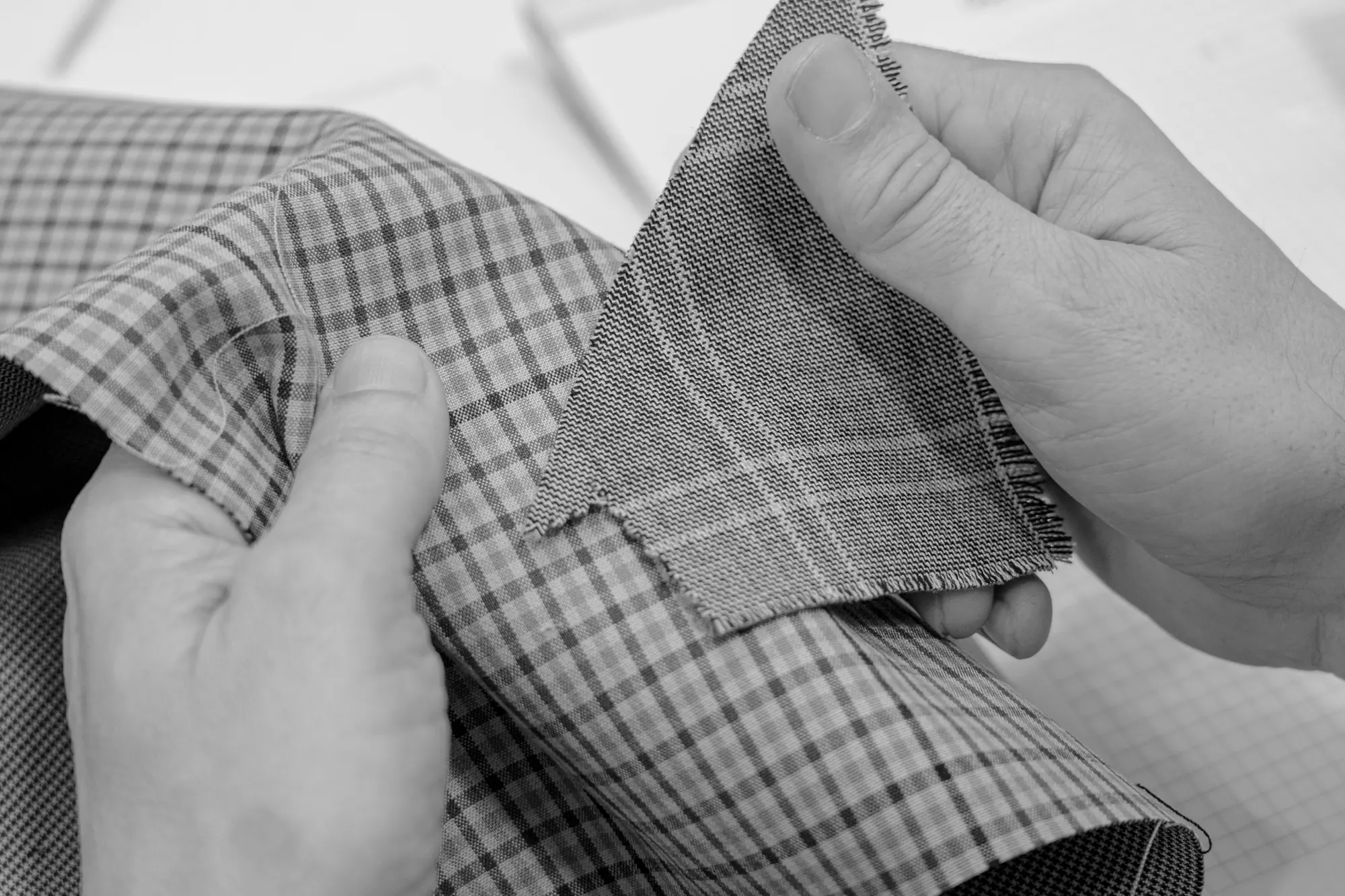
The brand reviews swatches: small pieces that show a fabric’s appearance and feel. Designers also assess the handle, meaning how the fabric feels to the touch, and its drape, or how it hangs and moves. Weight, thickness and structure affect the garment’s shape and comfort.
The textile company explains the options and checks suitability against the intended use. Composition alone does not explain a fabric’s behaviour: its construction and finishing also matter.
Why does a brand need a garment prototype?
Once a fabric has been selected, the brand usually requests a sample length: enough fabric to make an initial garment. This is different from a swatch, which cannot show how a complete garment will behave.
The brand’s development team and garment manufacturer use this length to make a prototype, an early version used to assess the design. They examine fit, movement, seams and the way the fabric responds to cutting, sewing and pressing.
A fabric may look right on the sample table but feel too heavy once made into a coat. Feedback can lead to changes to the garment, adjustments to the fabric, a switch to an entirely different fabric, or another round of prototyping before approval.
What is a sales sample collection?
If the prototype is approved, the brand orders fabric for its sales sample collection: garments shown to buyers, the people who select products for retailers.
The amount varies with the styles, colours and number of garments required. A brand may order a single sample roll or several, depending on the collection.
The garment manufacturer makes these samples so buyers can assess the collection and place orders. The approved fabric and garments become references for subsequent production. They record what buyers have seen and what the brand intends to deliver, making clear specifications and retained reference samples important.
Who orders the fabric for bulk production?
The brand combines orders from retailers with its commercial planning to decide how many garments to produce. Fabric requirements also depend on sizes, fabric consumption per garment and allowances needed for cutting.
In the workflow described here, the garment manufacturer orders production fabric from the textile company for the brand’s garments. Other businesses organise purchasing differently, with the brand ordering fabric directly.
Whichever arrangement applies, quantities, specifications, colours and delivery requirements need to be clear. The textile company can then plan bulk production, meaning the fabric required for the commercial garment run.
How do textile mills produce and check fabric? From raw materials to finished fabric
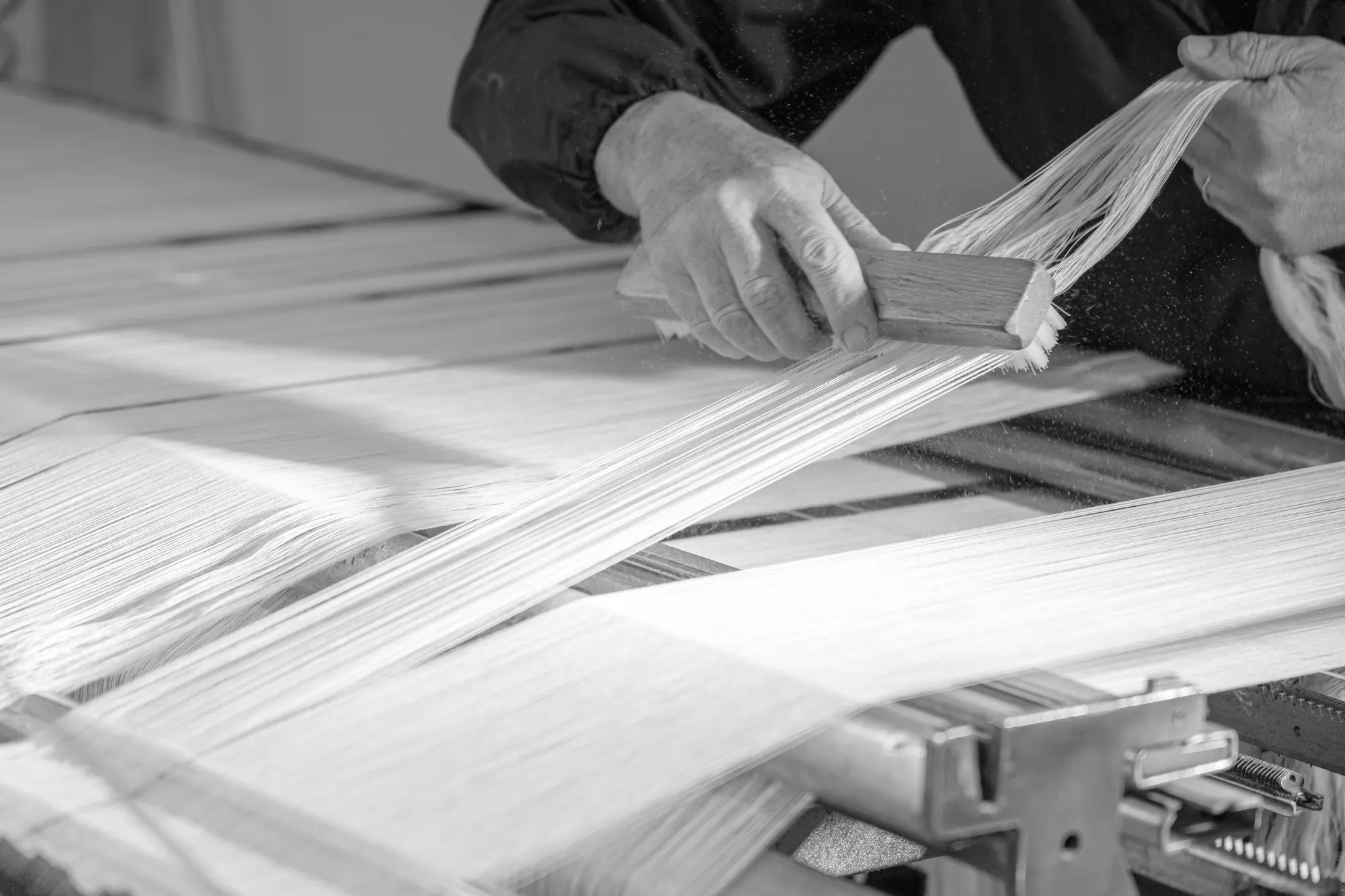
Producing that fabric involves coordinating raw materials, yarns, technical specifications and processing stages. Some work may take place within the textile company, while other stages involve specialist partners. The sequence depends on the material, including whether colour is introduced before or after the fabric is made. Quality checks accompany each stage, from the choice of materials to finishing.
- Raw materials and yarns. The team checks that the materials meet the agreed requirements. This includes fibre composition and material properties, as well as the thickness and consistency of the yarns used to make the fabric.
- Weaving. The yarns, after winding and warping, are interlaced on a loom. Before finishing, the resulting greige fabric is checked to confirm that its construction matches the technical specifications. Any discrepancies can then be addressed before further processing.
- Finishing. Finishing develops the fabric’s surface, feel and behaviour through mechanical or chemical treatments, which may be dry or wet. The type and sequence of treatments vary from one fabric to another. Technicians assess the result, checking colour against the approved reference, as well as weight, feel and appearance. They also check cuttable width – the width available for cutting garment pieces, measured between the inner edges of the selvedges and excluding these side borders. This measurement can affect how much fabric is needed to make the coat.
Once produced, the fabric undergoes physical and performance testing where specified by the client. These help assess how the material responds to wear and care. Separate chemical checks may also be required, for example to assess the presence of restricted substances.
- Pilling tests assess the tendency to form small balls of tangled fibres on the surface, which can change a garment’s appearance during wear.
- Abrasion tests assess resistance to repeated rubbing and the resulting wear. This matters where sleeves, bags or other surfaces rub against the garment.
- Colour fastness tests assess resistance to colour change or transfer under specified conditions, such as rubbing. Tests for washing may also be relevant, depending on the garment’s intended care instructions. These checks help assess the risk of fading or staining other materials.
The results are reviewed alongside visual and dimensional checks to determine whether the fabric meets the agreed specifications. If a requirement is not met, the team investigates and may need to carry out corrective work, followed by further checks, before approval and dispatch.
What is a CFA (Cut for Approval)?
When production is ready, the textile company sends the brand a CFA (Cut for Approval): a representative cutting taken from the production fabric for approval. Its size depends on the review requirements.
The brand compares it with the fabric approved for the sales samples. The aim is conformity with that reference and the agreed tolerances: acceptable limits of variation. This helps keep the market garments consistent with those presented to retailers, without assuming absolute identity between separate production runs.
The review covers aesthetic, technical and performance requirements, using the sample alongside the relevant measurements and test results. The approval sample does not always certify the entire production lot; wider inspections, checks and records remain necessary under the agreed quality plan.
After approval and completion of the required checks, the textile company agrees dispatch arrangements with the garment manufacturer.
How does fabric become a finished garment?
The fabric now moves from textile production into garment production. The manufacturer receives it, checks it against the order and prepares for cutting.
Patterns, templates defining each garment piece, guide the cutting of fronts, backs, sleeves and collars. The pieces are sewn together, with linings, buttons and other components added as required.
The brand and manufacturer check the finished garments against the approved product requirements. Fit, measurements, seams and pressing all influence the result: suitable fabric still needs suitable construction to become a coat that works as intended.
How do finished garments reach retailers?
The completed garments enter the brand’s distribution process and reach retailers in line with the collection’s launch calendar and intended season. Buyers’ earlier decisions become the products available on shop rails and online.
The garment’s feel, shape and performance reflect decisions made throughout the journey, from fabric selection to final garment checks.
Why does developing a fashion collection take time?
As we have seen so far, bringing a garment to market involves a series of connected stages. Development therefore needs to begin well before the collection’s launch. The brand needs to assess the fabric in a prototype, refine the garment and prepare the samples shown to retail buyers.
Their orders help define production quantities. The textile company then has to organise the materials and processing, check the finished fabric and complete the agreed approvals before delivery to the garment manufacturer.
Some activities can overlap, but each team depends on decisions and information from the others. A revised prototype or a fabric that needs further work can affect the stages that follow. The schedule must allow for development, feedback and corrections as well as manufacturing.
Some brands work differently
These brands follow a more flexible business model, releasing garments in drops – individual launches throughout the year – and selling directly to customers rather than through retailers, often via their own websites. They can adjust products, quantities and launch dates without having to follow retailers’ seasonal buying calendars.
For these brands, fabrics already available from stock are often a practical choice. These can include deadstock: unused fabric left over from previous production or orders. Choosing available materials reduces the wait for new fabric production and allows product development to happen closer to the intended launch.
Fabric availability can therefore help shape both the products and the quantities a brand chooses to launch. The fabric still needs to be checked for suitability, and the garments developed, sampled and made. Quantities may be limited, particularly with deadstock, and sourcing more of the same fabric later may not be possible.
At Bellandi Group, we have been part of this process since 1961.
Today, we work with hundreds of brands around the world and have an annual production capacity of over two million metres of fabric. Our experience comes from the daily work of developing fabrics, preparing samples, coordinating production and checking results against agreed requirements. It gives us a direct understanding of the collaboration behind a finished garment, long before it reaches the shops.