Sustainability approach
The five pillars behind the way we work
Built on controlled manufacturing, traceability, compliance, people and local commitment
Our sustainability approach:
from manufacturing to community.
Responsibility is closely connected to the way we manufacture. Our vertically integrated structure allows us to maintain direct control over key production stages, provide greater traceability and transparency, manage compliance requirements with a documented approach, and invest in machinery upgrades to improve efficiency, quality, and energy performance.
For processes carried out externally, we rely on a carefully selected local supply chain aligned with our standards for quality, traceability, chemical management, and responsible production. Our commitment also extends beyond manufacturing, through partnerships and initiatives supporting culture, education, inclusion, and long-term local development.
Our sustainability pillars
Traceability and
transparency
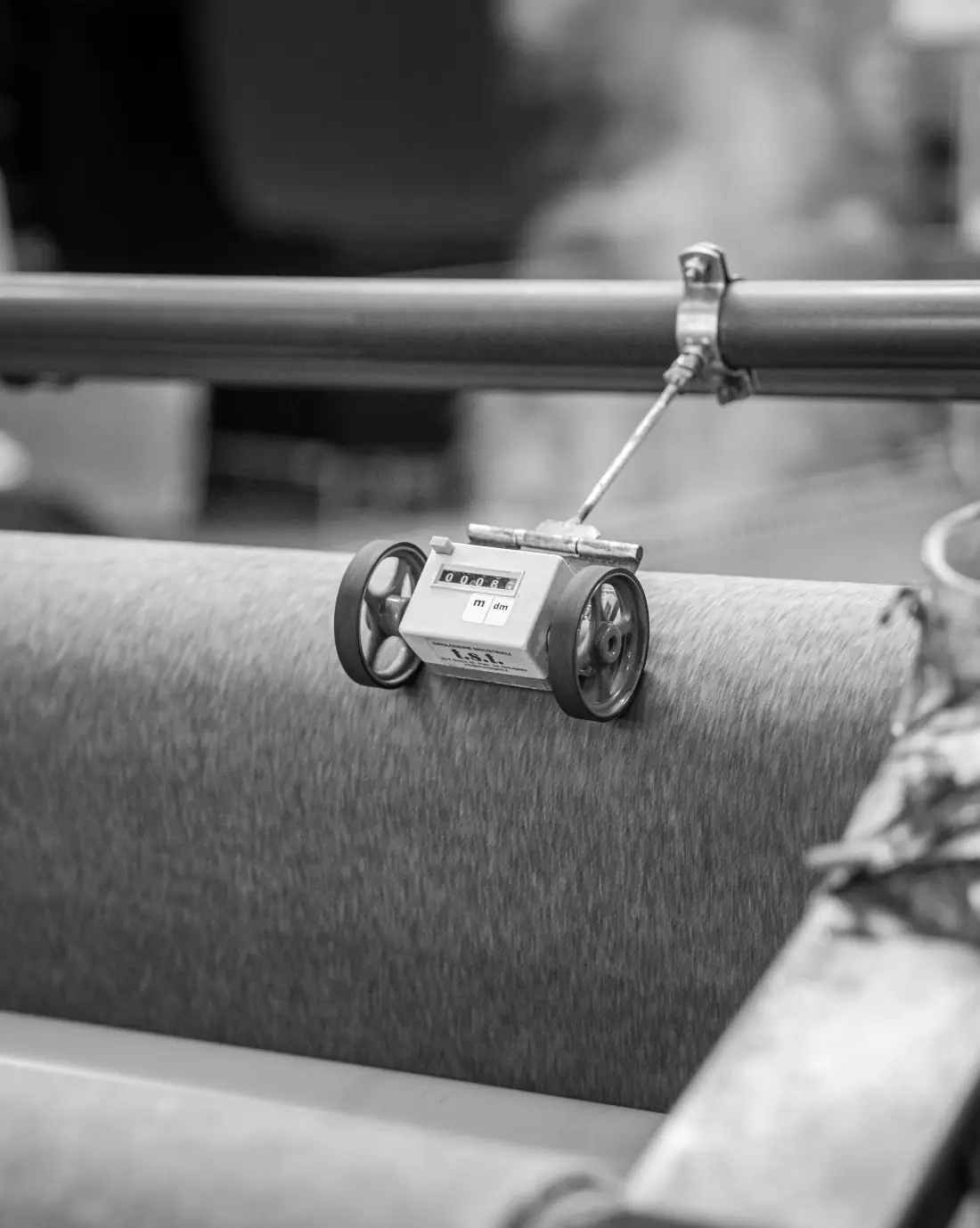
Most development and production happens within our mills, covering spinning, winding, warping, and weaving.
For dyeing and finishing – and to extend our in-house capabilities when needed – we work with over 70 local processing partners, located within a 15 km radius of our headquarters.
In addition, we work with more than 140 raw-material and semi-finished suppliers (supplier location does not necessarily reflect fiber origin, which depends on the specific material).
Our processes are managed through a digital traceability system that covers both in-house and partner phases, allowing us to share the documented production history of each textile with our clients and provide a high level of supply-chain transparency.
In addition, our textiles can be supplied under internationally recognised certification schemes, such as Responsible Wool Standard (RWS), Global Recycled Standard (GRS), Global Organic Textile Standard (GOTS), Organic Content Standard (OCS), and Masters of FLAX FIBRE™, supporting verified sourcing and auditable chain-of-custody documentation.

Environmental responsibility
in operations
We work to reduce the environmental impact of our mills through continuous upgrades aimed at improving both energy and production efficiency. We keep our supply chain local, and we constantly monitor chemical risk across our processes in line with the ZDHC MRSL.
As part of an internal circular approach, we recover and reintegrate wool waste from spinning and winding where technically feasible. Industrial wastewater treatment for all our manufacturing partners is managed by GIDA S.p.A., ensuring that water used in textile processes is properly treated and returned to the industrial system in the most environmentally responsible way.
Energy and operational efficiency upgrades across our mills:
2010
1360 Solar panels installed on the roofs of Filatura Mirò.
2020
Key machinery renewed at Filatura Mirò: 30% reduction in energy consumption.
2021
Key machinery renewed at Bellandi Slovensko: reducing overall energy consumption.
Responsible materials and
product compliance
As part of our chemical due diligence, we test incoming raw materials and semi-finished inputs and perform checks on finished textiles, verifying the compliance with our PRSL.
We are also certified to OEKO-TEX® STANDARD 100, which verifies that textiles meet strict limits for harmful substances from yarn to finished product.
Our textiles can be supplied under internationally recognised schemes such as Responsible Wool Standard (RWS), Global Recycled Standard (GRS), Global Organic Textile Standard (GOTS), Organic Content Standard (OCS), and Masters of FLAX FIBRE™.
For cotton, we also work with Better Cotton. Finally, we integrate preferred fibres such as Livaeco by Birla Cellulose, and TENCEL™ Lyocell.
People, rights and
ethical conduct
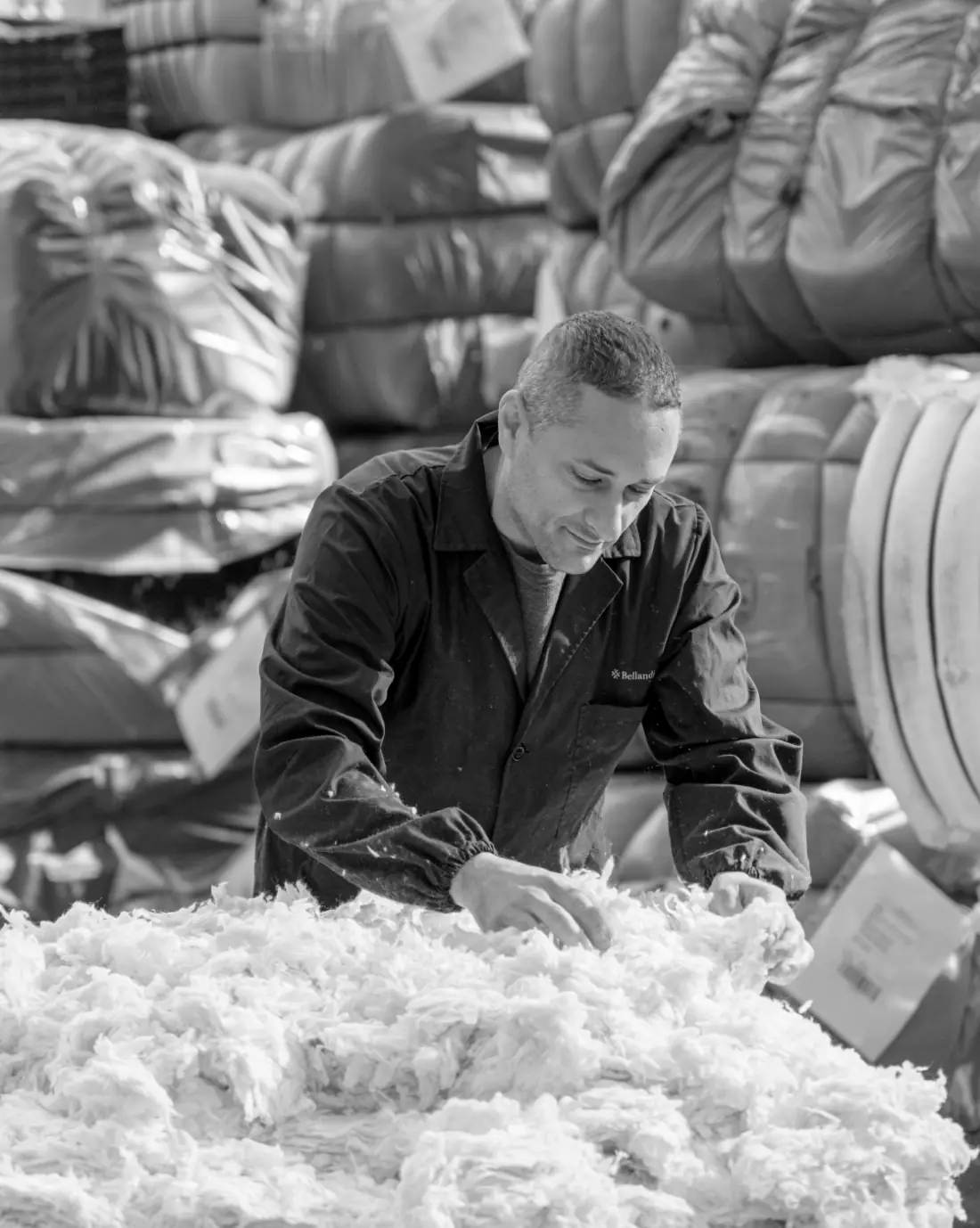
Our responsibility includes a clear commitment to human rights and fair working conditions – from health and safety to preventing discrimination, forced or child labor, and supporting freedom of association and collective bargaining.
Our governance principles cover anti-corruption and anti-bribery, accurate records and controls, whistleblowing protections, and data and privacy safeguards.
We expect suppliers, subcontractors, and partners to align with the same standards: our Supplier Code of Conduct defines requirements on legal compliance, integrity, working conditions, health and safety, environmental practices, confidentiality, and conflicts of interest – and requires these principles to be applied across their own supply chains.
Local community,
culture & education
Bellandi Group actively supports its local community through targeted partnerships and initiatives that promote culture, education, inclusion, and the long-term development of the local area.
The Group collaborates with schools, universities and cultural institutions, opening its sites to students and young professionals through educational visits and generating opportunities to discover the textile supply chain from within.
These initiatives help share manufacturing know-how, strengthen the connection between industry and education, and support the next generation of textile professionals.
Key partners include the Centro per l’Arte Contemporanea Luigi Pecci, Polimoda, Istituto Tecnico Tullio Buzzi and PIN – Polo Universitario Città di Prato.
